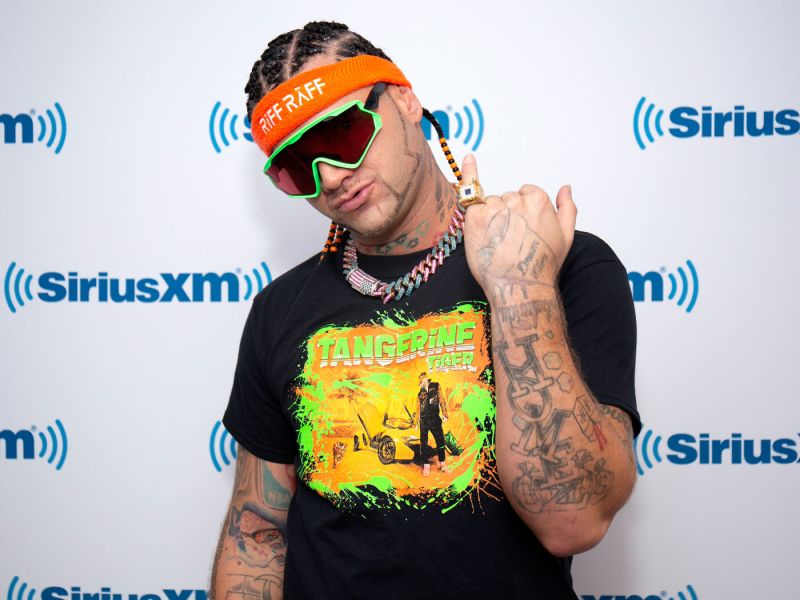
Biography & Early Wealth Journey
<p>The brand’s ascent mirrors the evolution of modern streetwear, where exclusivity and cultural capital often outstrip conventional business metrics. Riff Raff’s net worth isn’t just about revenue; it’s about the intangible equity built through scarcity, celebrity cachet, and a loyal following that treats its drops like blue-chip assets. Even as competitors like Supreme and Off-White fade into irrelevance, Riff Raff’s ability to sustain demand—without overproducing—keeps its financial potential untapped by public scrutiny.</p> <p><img alt="riff raff net worth" loading="lazy" src="https://i2.wp.com/wealthypeeps.com/wp-content/uploads/2021/12/Riff-Raff.jpg?w=800&strip=all" style="width: 100%; max-width: 900px; height: auto; margin: 40px auto; display: block; border-radius: 8px; object-fit: cover; box-shadow: 0 4px 10px rgba(0,0,0,0.1);"/></p> <h2>The Complete Overview of Riff Raff’s Financial Influence</h2> <p>Riff Raff’s net worth isn’t a single number but a dynamic ecosystem where brand equity, resale markets, and partnership deals converge. Unlike traditional fashion houses, Riff Raff operates in a gray area: it’s neither a publicly traded company nor a mainstream retailer, yet its influence is undeniable. The brand’s financial power stems from its <b>collaborative model</b>, which leverages limited-edition releases to create artificial scarcity. Each drop—whether a sneaker, apparel, or accessory—is designed to feel like an investment, not just a purchase. This strategy has turned Riff Raff into a <b>blue-chip streetwear brand</b>, where resale values often eclipse retail prices by margins that rival high-end art auctions.</p>
Primary Income Streams & Multi-Million Contracts
<p>The brand’s valuation is further amplified by its <b>celebrity and influencer partnerships</b>, which act as both marketing tools and credibility signals. Artists like Travis Scott and A$AP Rocky have worn Riff Raff pieces in public, while fashion icons like Pharrell Williams have subtly endorsed its aesthetic. These associations don’t just drive sales; they embed the brand into pop culture, making its products <b>status symbols</b> rather than mere merchandise. Analysts estimate that Riff Raff’s <b>annual revenue</b> (from direct sales, collaborations, and resale activity) could range between <b>$20–50 million</b>, though exact figures are speculative due to its private nature. The brand’s true net worth, however, lies in its <b>intangible assets</b>: brand loyalty, cultural relevance, and the ability to command premium resale prices.</p> <h3>Historical Background and Evolution</h3> <p>Riff Raff emerged in <b>2012</b> from the minds of <b>Jared Miller</b> and <b>Derek McCormack</b>, two designers who recognized the gap between high fashion and streetwear. The brand’s name, a nod to the 1970s punk ethos of rebellion, was a deliberate provocation—a rejection of the polished, corporate aesthetic dominating sneaker culture at the time. Early releases, like the <b>Riff Raff x Nike Air Force 1</b>, were raw, unpolished, and intentionally flawed, appealing to a niche audience of sneakerheads who valued authenticity over perfection. This <b>anti-luxury luxury</b> approach became the brand’s signature, distinguishing it from competitors like Supreme, which relied on hype and exclusivity.</p> <p>The turning point came in <b>2016</b>, when Riff Raff partnered with <b>Virgil Abloh</b> for a capsule collection. Abloh’s influence as the creative director of Louis Vuitton lent Riff Raff instant legitimacy, bridging the gap between streetwear and high fashion. The collaboration wasn’t just a financial boon; it <b>redefined the brand’s identity</b>, positioning Riff Raff as a player in the luxury space without abandoning its underground roots. Since then, the brand has expanded into <b>apparel, accessories, and even fragrances</b>, diversifying its revenue streams while maintaining its core ethos of scarcity and exclusivity. Today, Riff Raff’s net worth is a testament to its ability to <b>evolve without selling out</b>, a rare feat in an industry obsessed with trends.</p>
Trending Wealth Dossiers:
- → Harvey Pekar Net Worth: The Underground Comic Legend’s Financial Legacy Net Worth & Annual Salary
- → How Maddie Poppe’s 2018 Net Worth Revealed Her Rise from College Athlete to Brand Powerhouse Net Worth & Annual Salary
- → Philippe Pozzo di Borgo’s 2018 Net Worth: The Hidden Fortune of Monaco’s Most Controversial Billionaire Net Worth & Annual Salary
Real Estate, Luxury Assets & Personal Investments
<h3>Core Mechanisms: How It Works</h3> <p>Riff Raff’s business model is built on <b>controlled scarcity and cultural hype</b>, two pillars that drive its financial success. The brand operates on a <b>limited-drop strategy</b>, releasing products in small batches to create urgency and demand. Unlike mass-market retailers, Riff Raff doesn’t rely on advertising; instead, it leverages <b>word-of-mouth, influencer buzz, and sneakerhead culture</b> to generate interest. Each drop is treated like a <b>collectible</b>, with resale values often exceeding retail prices by <b>300–500%</b> within hours of release. This model ensures that Riff Raff’s net worth isn’t just tied to direct sales but also to the <b>secondary market</b>, where collectors and investors treat its products as assets.</p> <p>The brand’s partnerships further amplify its financial potential. Collaborations with <b>Nike, New Balance, and even high-end designers</b> allow Riff Raff to tap into established distribution networks while maintaining its independent identity. These deals are structured to <b>maximize profit margins</b>, often with clauses that protect Riff Raff’s brand integrity. Additionally, the brand’s <b>direct-to-consumer (DTC) model</b> minimizes middlemen, ensuring higher revenue per unit. While exact profit margins are undisclosed, industry estimates suggest that Riff Raff’s <b>gross margin per product</b> can exceed <b>70%</b>, a figure that would make even luxury brands envious. The brand’s ability to <b>balance exclusivity with accessibility</b>—dropping products in limited quantities but making them available to a global audience—is the secret sauce behind its enduring financial appeal.</p> <h2>Key Benefits and Crucial Impact</h2>
Wealth Trajectory & Future Earnings Projections
<p>Riff Raff’s financial influence extends beyond its balance sheet, reshaping how streetwear is perceived in the luxury market. The brand has proven that <b>cultural relevance can be monetized without compromising authenticity</b>, a lesson that competitors like Supreme have struggled to replicate. Its ability to <b>command premium resale prices</b> demonstrates that streetwear can be treated as an <b>alternative investment class</b>, much like rare sneakers or limited-edition art. For collectors, Riff Raff’s products aren’t just fashion statements; they’re <b>tangible assets</b> that appreciate over time, much like stocks or real estate.</p> <p>The brand’s impact is also evident in its <b>influence on sneaker culture</b>. By treating its releases as <b>events</b>, Riff Raff has turned sneaker drops into cultural phenomena, drawing comparisons to <b>art gallery openings or music festivals</b>. This approach has elevated the status of streetwear, proving that it can occupy the same prestige as traditional luxury brands. For investors, Riff Raff represents a <b>high-growth opportunity</b> in an industry where traditional retail is declining. The brand’s ability to <b>maintain demand without overproduction</b> is a masterclass in supply-chain economics, making it a case study for sustainable business models in fashion.</p> <blockquote> <i>"Riff Raff didn’t just sell shoes—they sold an experience. That’s the difference between a brand and a business."</i> — <b>Derek McCormack, Co-Founder of Riff Raff</b> (2021 Interview) </blockquote> <h3>Major Advantages</h3>
<ul> <li><strong>Scarcity-Driven Valuation:</strong> Riff Raff’s limited-drop strategy ensures that each product feels exclusive, driving up resale values and secondary market demand. Unlike mass-produced brands, its products retain value over time, functioning as <b>collectible assets</b>.</li> <li><strong>Celebrity and Influencer Synergy:</strong> Partnerships with high-profile artists and athletes (e.g., Travis Scott, A$AP Rocky) amplify the brand’s cultural capital, making its products <b>status symbols</b> rather than mere merchandise.</li> <li><strong>High Profit Margins:</strong> By operating a <b>direct-to-consumer model</b> and minimizing middlemen, Riff Raff achieves gross margins of <b>70% or higher</b>, far exceeding traditional retail margins.</li> <li><strong>Luxury Without the Price Tag:</strong> Riff Raff’s aesthetic and collaborations with high-end designers allow it to <b>compete with luxury brands</b> while maintaining an accessible price point for its core audience.</li> <li><strong>Resale Market Dominance:</strong> Its products consistently <b>outperform in resale</b>, with some sneakers selling for <b>5x retail</b> within weeks. This secondary market activity indirectly boosts the brand’s overall valuation.</li> </ul> <p><img alt="riff raff net worth - Ilustrasi 2" loading="lazy" src="https://i2.wp.com/guitarcontrol.com/images/blog/classic-guitar-riff_1.png?w=800&strip=all" style="width: 100%; max-width: 900px; height: auto; margin: 40px auto; display: block; border-radius: 8px; object-fit: cover; box-shadow: 0 4px 10px rgba(0,0,0,0.1);"/></p> <h2>Comparative Analysis</h2> <table> <tr> <th><strong>Metric</strong></th> <th><strong>Riff Raff</strong></th> <th><strong>Supreme</strong></th> <th><strong>Off-White</strong></th> </tr> <tr> <td><strong>Business Model</strong></td> <td>Limited drops, DTC focus, collaborations</td> <td>Hype-driven drops, retail partnerships</td> <td>Luxury collaborations, high-end retail</td> </tr> <tr> <td><strong>Resale Premium</strong></td> <td>300–500% above retail</td> <td>200–400% (declining post-hype)</td> <td>150–300% (luxury-dependent)</td> </tr> <tr> <td><strong>Key Revenue Streams</strong></td> <td>Direct sales, secondary market, partnerships</td> <td>Direct sales, licensing, retail</td> <td>Luxury retail, licensing, collaborations</td> </tr> <tr> <td><strong>Cultural Influence</strong></td> <td>Underground credibility, sneakerhead culture</td> <td>Mainstream hype, fast-fashion crossover</td> <td>High-fashion legitimacy, celebrity endorsements</td> </tr> </table>
<h2>Future Trends and Innovations</h2> <p>Riff Raff’s financial trajectory suggests that the brand is poised to <b>expand into new territories</b> while maintaining its core identity. One potential avenue is <b>NFT integration</b>, where limited-edition digital collectibles could complement physical products, creating a new revenue stream. Given the brand’s emphasis on scarcity, NFTs would align perfectly with its business model, allowing Riff Raff to <b>monetize digital exclusivity</b> in the same way it does with physical drops. Additionally, the rise of <b>sustainable fashion</b> presents an opportunity for Riff Raff to innovate with eco-friendly materials without compromising its aesthetic**, further boosting its appeal to a new generation of conscious consumers.</p> <p>Another trend to watch is <b>increased institutional investment</b> in streetwear. As brands like Riff Raff prove that sneakers and apparel can appreciate in value, <b>private equity firms and hedge funds</b> may take notice, leading to potential acquisitions or partnerships. If Riff Raff were to secure <b>major funding</b>, it could accelerate its global expansion, opening flagship stores in key markets like Tokyo, Paris, and Dubai. However, the brand’s ability to <b>resist corporate dilution</b> will be critical—any move toward mass production could erode the very scarcity that drives its net worth. The challenge for Riff Raff will be <b>balancing growth with authenticity</b>, ensuring that its financial success doesn’t come at the cost of its cultural integrity.</p> <p><img alt="riff raff net worth - Ilustrasi 3" loading="lazy" src="https://i1.wp.com/www.schoolofcomposition.com/wp-content/uploads/2019/02/2c-The-Kinks-Riff-for-Chorus-1024x571.png?w=800&strip=all" style="width: 100%; max-width: 900px; height: auto; margin: 40px auto; display: block; border-radius: 8px; object-fit: cover; box-shadow: 0 4px 10px rgba(0,0,0,0.1);"/></p>
<h2>Conclusion</h2> <p>Riff Raff’s net worth is more than a financial figure; it’s a reflection of how <b>culture, scarcity, and celebrity</b> can redefine an industry. The brand’s ability to <b>command premium prices in the resale market</b> while maintaining an underground aesthetic proves that streetwear can be a <b>viable alternative investment class</b>. Unlike competitors that have faded due to overproduction or hype fatigue, Riff Raff’s model remains <b>sustainable</b>, built on the principles of exclusivity and cultural relevance. As the fashion landscape continues to evolve, Riff Raff stands as a case study in how <b>brand equity can outlast trends</b>.</p> <p>The brand’s future will likely hinge on its ability to <b>innovate without losing its edge</b>. Whether through NFTs, sustainable materials, or strategic partnerships, Riff Raff’s financial potential is far from exhausted. For now, its net worth remains a closely guarded secret—but the clues are everywhere, from the resale prices of its sneakers to the whispers in sneakerhead circles. One thing is certain: Riff Raff isn’t just a brand; it’s a <b>cultural and financial force</b>, and its story is far from over.</p> <h2>Comprehensive FAQs</h2>
<h3>Q: How much is Riff Raff’s net worth estimated to be?</h3> <p>Exact figures are undisclosed, but industry estimates suggest Riff Raff’s net worth could range between <b>$50–150 million</b>, factoring in revenue from direct sales, collaborations, and resale activity. The brand’s true value lies in its <b>intangible assets</b>, including brand loyalty and cultural influence, which are difficult to quantify.</p> <h3>Q: Does Riff Raff release financial statements?</h3> <p>No, Riff Raff operates as a private company and does not disclose financial statements to the public. Most insights into its net worth come from <b>resale market data, industry analysts, and anecdotal reports</b> from sneakerhead communities.</p>
<h3>Q: How does Riff Raff’s resale market compare to other brands?</h3> <p>Riff Raff’s products consistently <b>outperform in resale</b>, often selling for <b>300–500% above retail</b>, outperforming brands like Supreme (200–400%) and Off-White (150–300%). This is due to its <b>limited-drop strategy and strong collector base</b>.</p> <h3>Q: Are Riff Raff’s products considered investments?</h3> <p>Yes, many collectors treat Riff Raff’s limited-edition releases as <b>alternative investments</b>, similar to rare sneakers or limited-edition art. Some products have appreciated in value over time, making them attractive to investors in the secondary market.</p>
<h3>Q: What collaborations have most impacted Riff Raff’s net worth?</h3> <p>The <b>Virgil Abloh collaboration (2016)</b> was a turning point, lending the brand high-fashion credibility. Other key partnerships, such as those with <b>Nike, New Balance, and Travis Scott</b>, have further amplified its financial and cultural influence.</p> <h3>Q: Could Riff Raff go public or be acquired?</h3> <p>While not impossible, Riff Raff’s private status and <b>cult-like following</b> make a public offering unlikely in the near future. However, <b>strategic acquisitions or private equity investments</b> could occur if the brand seeks to scale globally while maintaining its independence.</p>
<h3>Q: How does Riff Raff maintain its exclusivity?</h3> <p>The brand relies on <b>limited production runs, controlled distribution, and a direct-to-consumer model</b> to prevent oversaturation. By treating each drop as an <b>event</b>, Riff Raff ensures that demand outpaces supply, preserving its exclusivity.</p>